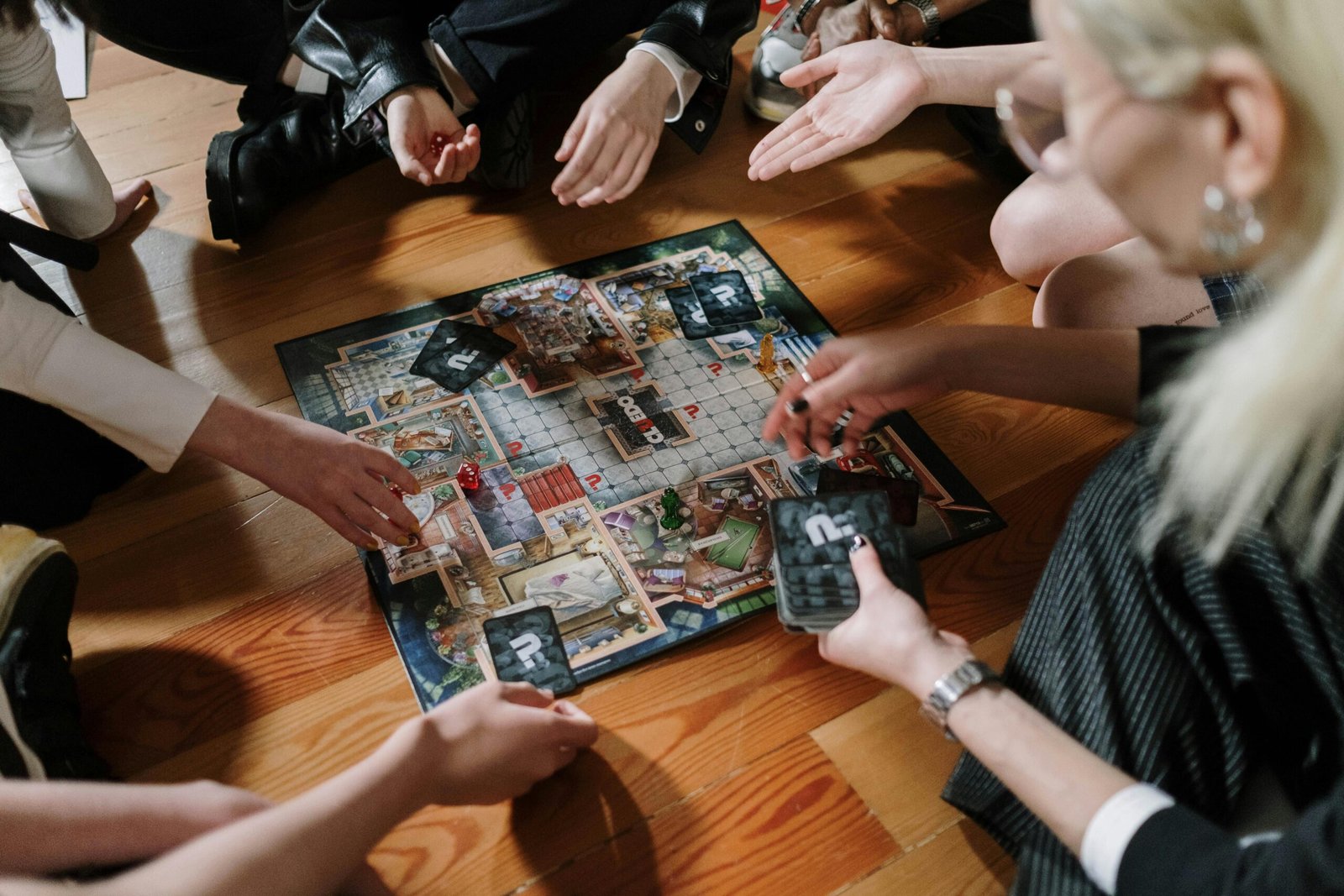
It’s a wet Sunday afternoon and someone has pulled a box off the shelf. Tiles are being laid across the kitchen table. Within twenty minutes, the whole household is locked in concentration, occasionally interrupted by accusations of betrayal. Across the UK, this scene plays out in millions of homes, pubs, cafés, and community halls every single week.
Strategy board games, the kind where planning and decision-making matter more than luck, have become a full-blown cultural force in Britain. If the term itself is new to you, our explainer on what a strategy board game actually is walks through the genre and its main categories. According to IMARC Group, the UK board game market reached over $611 million in 2024, with projections pointing toward $1.5 billion by 2033 at a growth rate of roughly 9.4% per year. These aren’t novelty purchases gathering dust after Christmas either. People are buying, playing, replaying, and building social lives around these games in ways that would have seemed unlikely just fifteen years ago.
What makes a game about managing a fictional railway network or trading goods in Renaissance Florence so compelling that grown adults will cancel plans to keep playing? The reasons run from the deeply psychological to the unmistakably British, and they’re worth understanding if you want to know where leisure culture in this country is heading.
Looking for your next strategy game? Browse our picks for the Best Strategy Board Games and find something perfect for your table.
What Makes Strategy Board Games So Appealing
The appeal operates on several levels at once, which is part of why it endures. A strategy board game is simultaneously an intellectual puzzle, a social event, and a physical, tactile experience. Very few leisure activities manage to deliver all three of those things in a single sitting, and fewer still improve with repetition the way these games do.
Consider the tactile dimension alone. In an era where most entertainment arrives through a glass screen, there’s something almost countercultural about handling chunky wooden tokens, fanning out linen-finish cards, and watching a map take shape tile by tile across a table. The physical quality of modern board games is remarkable, and it contributes more to the experience than casual observers tend to realise. The sensory richness of manipulating real objects in a shared physical space creates a level of engagement that purely digital formats struggle to replicate.
But the real engine driving long-term loyalty is intellectual. The next few sections examine each element of the appeal in detail.
Intellectual Challenge and the Mastery Curve
The first play of any serious strategy game tends to be a glorious mess. Rules get misread. Terrible trades happen. Someone spends twenty minutes building toward a plan that collapses in a single turn. And then, almost universally, people want to play again immediately because they can suddenly see what they should have done.
That pull between confusion and clarity is the learning curve at work, and it’s one of the most addictive qualities the hobby has to offer. Every turn demands planning, risk evaluation, and the ability to read what other players might be doing, all while adapting to a board state that shifts constantly. The mental challenge is substantial but it arrives wrapped in theme and social context, which means the brain workout rarely feels like effort.
What separates this from a one-off novelty is the depth of the progression. After twenty plays of a well-designed game, patterns start emerging that were invisible during the first five. After fifty, the same title can feel like an entirely different experience because understanding the system changes how you interact with it. A hundredth play might reveal strategic possibilities that dedicated players discuss online for years. The mastery curve in strategy gaming doesn’t flatten quickly, which explains why people return to the same titles month after month rather than constantly chasing new purchases.
Social Connection That Runs Deeper Than Small Talk
Board games restructure social interaction in a way that tends to benefit everyone at the table. The game provides a shared focus, a reason to talk, a rhythm of turns that keeps energy moving. Negotiation happens naturally as players propose trades, form temporary alliances, and occasionally execute betrayals that become the stuff of legend among their group.
The result is bonding that goes well beyond surface-level conversation. Players generate shared memories, inside jokes, and long-running rivalries that become woven into the fabric of their friendships. These emergent stories, the comeback nobody expected, the bluff that worked perfectly, the catastrophic miscalculation that everyone still laughs about months later, belong entirely to the people who were at the table. No developer scripted them, and no two groups will ever produce the same ones.
Cooperative strategy games add a further dimension by putting everyone on the same side against the game itself. The table becomes a collective problem-solving exercise where disagreement about the right course of action is part of the fun, and where success or failure is shared equally. Both competitive and cooperative formats create social bonds that feel earned rather than incidental. For players who often game alone, our roundup of the best solo strategy board games covers titles designed to deliver the same depth without a full table.

Stress Relief Through Focused Engagement
The relationship between concentration and relaxation sounds contradictory until you consider how stress actually works. Most daily anxiety stems from scattered attention, the background hum of half-processed worries competing for mental space. A strategy game demands enough cognitive bandwidth to displace all of that. When your brain is fully occupied with an engaging, structured problem, there simply isn’t room for rumination.
Psychologists describe this as a flow state, and board gaming is one of the most reliable ways to access it in a social setting. The combination of mental absorption and warm company produces an experience that people consistently describe as restorative. Add in the physical grounding of handling real components at a real table, and the contrast with an evening of passive screen consumption becomes stark. Board game nights tend to leave people feeling energised rather than drained, which partly explains why so many households that picked up the hobby during pandemic lockdowns continued playing long after restrictions ended.
Cognitive and Executive Function Benefits
The cognitive demands of strategic play extend beyond the game itself. Regular players exercise working memory by holding complex board states in mind, practise impulse control by resisting flashy short-term moves in favour of long-term positioning, develop cognitive flexibility by adjusting plans when circumstances shift, and strengthen analytical thinking through repeated pattern recognition and risk assessment.
These benefits apply across age groups. For younger players, strategy games teach planning and self-regulation through an activity they’re genuinely motivated to participate in, which tends to make the skills stick more effectively than formal instruction. For adults, regular play functions as ongoing cognitive maintenance, keeping executive functions sharp and responsive in ways that transfer into professional and personal decision-making. The fact that none of this feels like exercise is precisely what makes it effective.
Ready to find your next challenge? Discover the Best Strategy Board Games for every experience level.
Why Strategy Board Games Outperform Digital Alternatives for Social Play
Digital games excel at many things, but replicating the social richness of a shared table is not among them. The distinction matters because social connection is one of the primary reasons people are drawn to strategy gaming in the first place.
Physical presence changes everything about how competition and cooperation feel. Reading a facial expression across the table, hearing a genuine laugh at an absurd outcome, noticing the hesitation that reveals someone’s hand: this full-bandwidth human interaction creates emotional weight that voice chat and text simply cannot reproduce. The social contract stays intact too, because the people at the table are sharing food, sharing space, and will see each other again next week. Online anonymity breeds distance. A shared table breeds accountability and warmth.
Board games also respect time in a way that most digital entertainment does not. Where video games use reward loops and algorithmic systems designed to extend sessions indefinitely, a board game has a natural arc: a beginning, a middle, and an end. You play, experience something complete, and put the box away. That built-in boundary is part of what makes the hobby sustainable rather than consuming.
The UK’s Strategy Game Boom
The British love of strategy gaming has deep roots. Chess clubs since the Victorian era. H.G. Wells inventing modern wargaming in 1913 with Little Wars. Generations of bridge, whist, and other thinking games embedded in pub and parlour culture. The appetite for cerebral competition has always been there.
What the last decade provided was infrastructure. Board game cafés exploded across the country. Thirsty Meeples in Oxford pioneered the format, and the model proved irresistible. Pay a small cover charge, pick from a library of hundreds of titles, and have staff teach you the rules. Draughts, Chance & Counters, and scores of independent venues followed, establishing themselves in cities and towns from London to Hull to Glasgow. Asmodee UK recognised the momentum, launching an initiative in 2025 to support over 60 cafés with events and community programmes, including a partnership with Mind, the mental health charity, to highlight the role games play in reducing social isolation.
These cafés serve as the most effective discovery pipeline the hobby has. Most people’s board game knowledge begins and ends with Monopoly. A single café visit can completely reframe that understanding, introducing players to resource management, engine building, and cooperative strategy titles they’d never have encountered on a shop shelf.
The convention scene tells a similar story of growth. UK Games Expo at Birmingham’s NEC drew over 42,000 unique visitors in 2025, featuring 780 exhibitors and a trade hall floor that now exceeds Gen Con’s, placing it second in the world behind only Essen Spiel in Germany. Airecon in Harrogate, Dragonmeet in London, and countless regional events fill the calendar year-round. British game designers are earning international recognition for work that emphasises storytelling, historical themes, and mechanical innovation, and specialist retailers like Zatu are thriving alongside the café boom.
The market projection of $1.5 billion by 2033 reflects a structural change in British leisure habits rather than a temporary spike. Strategy board games offer intellectual stimulation, genuine human connection, and a tactile richness that no screen-based alternative has managed to match. The ecosystem now exists to support them at scale, from living room tables to world-class conventions, and every indication suggests the UK’s enthusiasm for the genre will continue to deepen.
Where New Players Are Starting Right Now
Café staff and retailers consistently report the same handful of titles pulling new players into the hobby: Azul, Splendor, Ticket to Ride, and Catan. Our beginner’s guide to strategy board games walks through why these specific titles work so well as an entry point, and roughly what order to introduce them in if you’re bringing a new group into the hobby yourself.
Once a group has worked through those early titles, the natural next step for most UK players is toward heavier games with genuine strategic weight, a jump covered in our guide to choosing your first heavy strategy board game. It’s a bigger leap than picking a second gateway game, and getting it right matters for keeping the momentum this chapter of British gaming culture has built up.
Curious where to start your own collection? Try our strategy board game finder for a quick, personalised recommendation based on how your group actually plays.
Leave a Reply